Swap Ethereum to Arbitrum: A Safe Transfer Guide
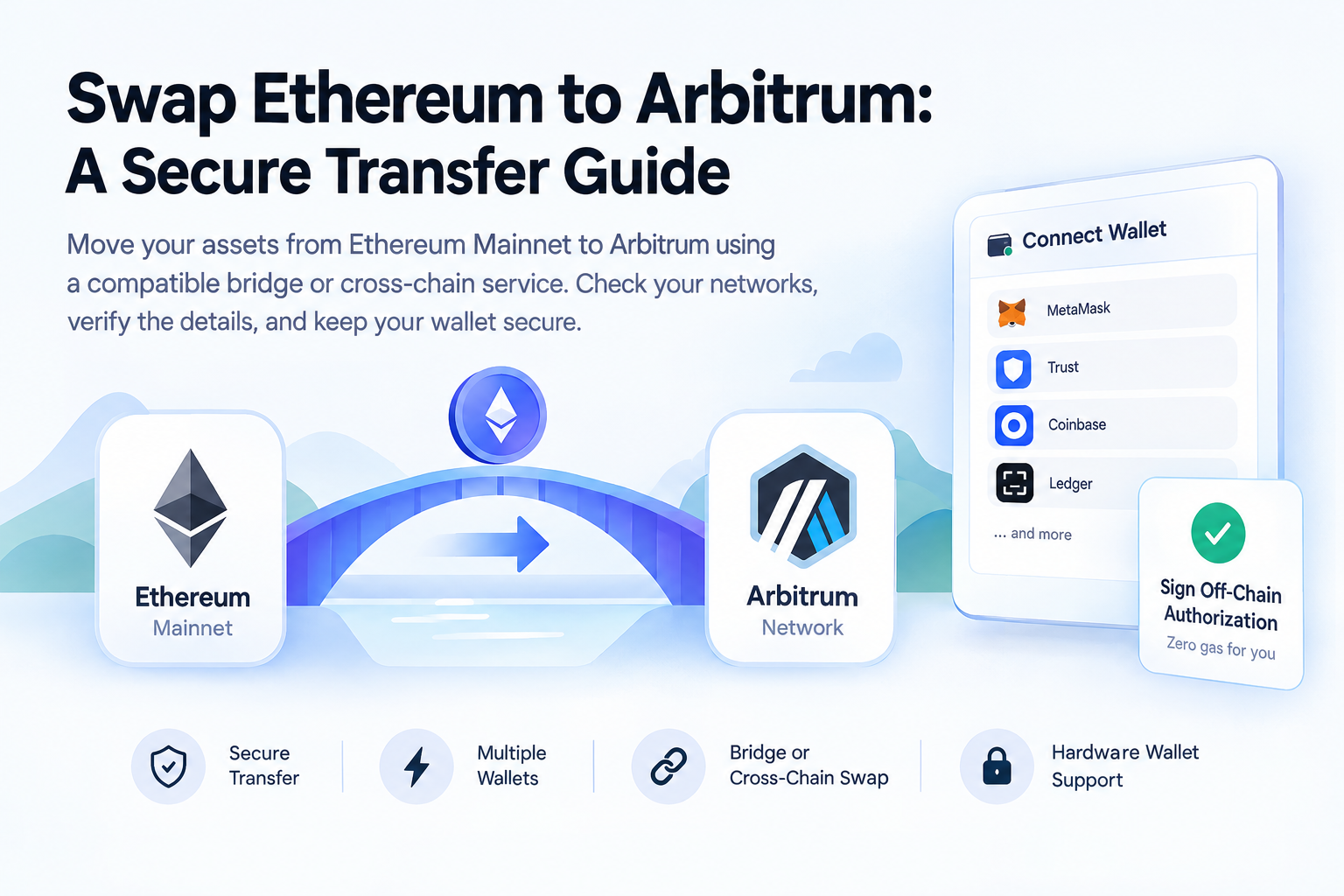
Swap Ethereum to Arbitrum: A Safe Transfer Guide
Swap Ethereum To Arbitrum means moving ETH or supported tokens from Ethereum Mainnet to Arbitrum using a compatible bridge or cross-chain service. Choose a route that supports your asset, check transaction costs, and verify the destination network before confirming. Hardware wallet users should also inspect every approval and signature. Try Onchain at onchaindiagnois.com.
Swap Ethereum to Arbitrum: What You Need to Know
Ethereum Mainnet and Arbitrum are separate blockchain networks. Assets held on Ethereum Mainnet do not automatically appear on Arbitrum. To move assets between them, you need a compatible bridging service or cross-chain route.
An Ethereum to Arbitrum bridge helps transfer supported assets between these networks. Some services offer bridging alone, while others combine bridging with a token swap. The process, fees, supported assets, and estimated completion time depend on the provider and route.
Onchain is a web dApp on Ethereum Mainnet that helps users authorize token movements through Permit2, a Uniswap contract. Users connect a wallet, approve Permit2, and sign an off-chain authorization. Users pay zero gas for signing this authorization because the server wallet pays the gas for that workflow. This does not mean every transfer or bridge transaction is free, or that an authorization alone completes a cross-chain transfer.
|
Option |
Main purpose |
What to check |
|
Official Arbitrum bridge |
Move supported assets from Ethereum to Arbitrum |
Supported tokens, transaction requirements, and fees |
|
Cross-chain swap service |
Combine bridging and swapping where supported |
Exchange rate, route, slippage, and destination network |
|
Onchain Permit2 authorization |
Authorize token movement through an off-chain signature |
Permission scope, token details, and the service's current functionality |
For independent background information, read Ethereum's Layer 2 overview and the Uniswap documentation.
Step-by-Step: How to Swap Ethereum to Arbitrum
- Choose a compatible service. Decide whether you need a bridge or a service that combines bridging and swapping. Start with the official Arbitrum website and confirm that the chosen route supports your asset.
- Check your wallet and network. Confirm that your ETH or supported token is on Ethereum Mainnet. Make sure you can access the receiving wallet and select Arbitrum when the service requests a destination network.
- Review the transfer details. Check the source token, destination token, receiving address, estimated output, and fees. If the service displays slippage or route information, review those details before proceeding.
- Connect your wallet securely. Open the service using its verified website address. Connect your wallet and check that the displayed account is the one you intend to use for the transfer.
- Inspect approvals and signatures. Read every wallet request before approving it. If Permit2 authorization is requested, verify the token, spender, and requested permission details. Cancel any request you do not understand.
- Confirm the transaction or authorization. Follow the selected provider's instructions. Remember that an off-chain signature and an on-chain transaction are different actions; signing alone does not prove that assets reached Arbitrum.
- Verify the destination. Check the transaction status using the relevant blockchain explorer or the service's transaction interface. Confirm that the receiving wallet is viewing Arbitrum and that the expected asset appears before assuming the transfer is complete.
Onchain-specific note: Onchain's Permit2 workflow supports off-chain authorization, but you should not assume that authorization alone performs a complete Ethereum-to-Arbitrum bridge. Check the current capabilities of the Onchain swap interface before proceeding.
Common Issues and How to Fix Them
- ETH is missing on Arbitrum: Check that your wallet is connected to the correct network and that the transfer route supports the asset.
- The transfer is pending: Look up the transaction status and follow the provider's instructions. Avoid repeating the transfer before checking its status.
- The wallet rejects a signature: Verify the selected account and network. Review the request again, and cancel it if the displayed information is unclear.
- The approval requests unexpected permissions: Stop and inspect the token, spender, and allowance details. Do not approve permissions you cannot explain or do not intend to grant.
- The received amount differs from the estimate: Review the quoted route, exchange rate, slippage, and applicable fees. Contact the service through its official support channel if the result remains unclear.
How to Contact Onchain Support Safely
Onchain does not offer phone support. Use its official support channels if you need help with wallet authorization or the service.
- In-app chat: Visit Onchain's official website and open the chat in the bottom-right corner.
- Telegram group: Access the Telegram group through the official Onchain website to avoid joining an imitation community.
Watch for fake support agents who promise to recover funds or resolve pending transfers in exchange for sensitive wallet information. Never disclose your recovery phrase or private key to another person.
Onchain staff will never ask for your seed phrase, private key, or 2FA code.
Always check the website address before connecting your wallet. If a request seems suspicious or asks you to sign an unexplained message, stop and seek help through an official channel.
Frequently Asked Questions
How do I bridge Ethereum to Arbitrum?
You can bridge supported assets by using a compatible service that supports Ethereum Mainnet and Arbitrum. Connect your wallet, select the source and destination networks, review the asset and fees, and confirm the required steps. Check the transaction status and destination balance after submission.
Can I swap ETH from Ethereum to Arbitrum without a centralized exchange?
Yes, compatible decentralized services can provide cross-chain transfers without requiring a centralized exchange. Choose a service that explicitly supports ETH on Ethereum Mainnet and Arbitrum as the destination. Review its route, fees, and signing requirements before authorizing any transaction.
How does an Ethereum to Arbitrum bridge work?
A bridge uses a supported mechanism to move assets or their corresponding representations between blockchain networks. The exact process depends on the bridge and asset. Some services also include a swap. Check the provider's documentation to understand how your chosen route handles the transfer.
Can I transfer ETH to the Arbitrum network using a hardware wallet?
Yes, if your wallet setup and selected bridging service support the required networks and signing process. Onchain supports Ledger through MetaMask, Trezor through Rabby, Tangem through WalletConnect, and Safe through WalletConnect. These connection options do not guarantee that every bridge supports each hardware wallet.
Does Onchain charge gas for a Permit2 signature?
Users pay zero gas for signing Onchain's off-chain authorization because the server wallet pays gas for that workflow. This does not mean all blockchain transactions or bridge transfers are free. Review the current service details to understand any separate transaction requirements and network costs.
Key Takeaway Box
To Swap Ethereum To Arbitrum, use a compatible bridge or cross-chain service, confirm the destination network, and inspect approvals before signing. Onchain lets users sign its Permit2 authorization off-chain without paying gas for signing; the server wallet pays that gas. A Permit2 signature alone does not guarantee a completed bridge. Review the current service details and visit Onchain to get started.
Ready to try Onchain?
Visit Onchain to learn about its wallet connection and Permit2 authorization workflow.
If you want to explore the swap interface, visit swap.onchaindiagnois.com. Confirm current functionality, token support, and requested permissions before connecting your wallet or signing an authorization.
Comments
Post a Comment